The High Sheriff’s Fund
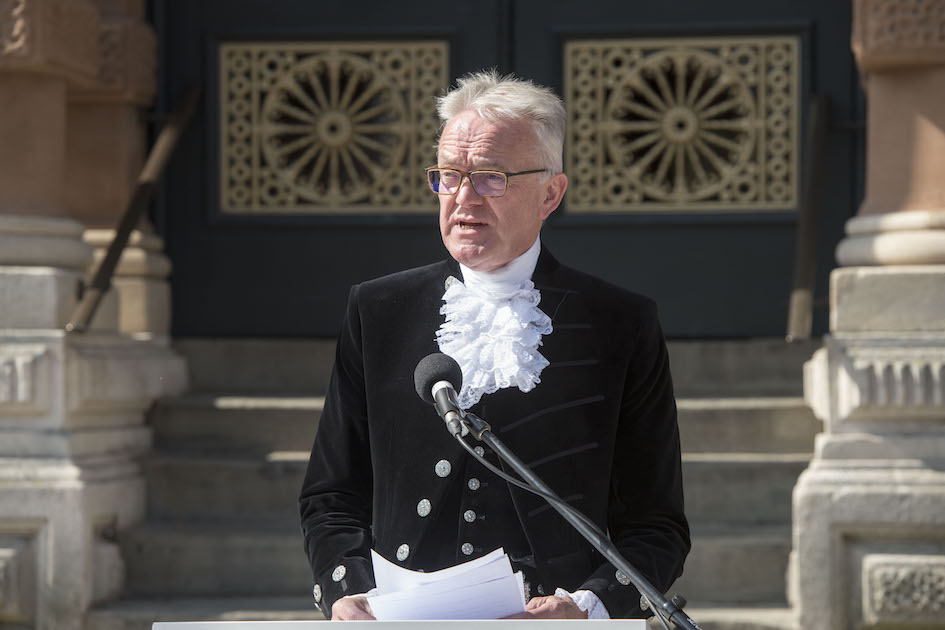
The High Sheriff of Suffolk 2026-2027 - Oliver Paul DL
After the Monarchy, the High Sheriff is the country’s oldest secular office, dating back more than 1,000 years. In that context, I’m very aware that one shrieval year represents barely the blink of an eye, but the challenge remains to make small improvements.
The role is highly varied and far-reaching, offering the opportunity to understand the Suffolk ecosystem, to connect people and to commend those who do good.
I’m keen to use the modest convening powers of the shrievalty to spotlight the vital role food plays in shaping our social values. Whether it’s promoting healthier and more economical eating, recognising those improving the food system, strengthening local distribution networks, offering hospitality training to ex-offenders for example, or simply bringing decision-makers together around a table – food is a powerful vehicle for change, and I believe it’s a compelling theme to weave into a shrieval year.
As the sixth member of my family to serve as High Sheriff of Suffolk, I’m conscious of the enormous privilege and of how the role has evolved. It’s important not to be swept up in the history of the position, but to do justice to it. To serve and support the people of Suffolk in an inclusive, purposeful and public-facing way.
If you know of a group in our community who would benefit from a visit, recognition and thanks, please get in touch via the form below.
Oliver Paul DL
Find out about the High Sheriff’s Fund here.
About The Shrievalty
The Office of High Sheriff is an independent, non-political, Royal appointment for one year. Duties include supporting the Lord-Lieutenant, who is the King’s personal representative in Suffolk, and the invaluable work of the judiciary. Key agencies involved in justice, security, crime prevention, and victim support include Judges, the Police, Magistrates, Tribunals, Prisons and Probation Services, Coroners, Border Force, and others.
The High Sheriff actively promotes the work of the emergency services, voluntary and charitable sectors, community groups, businesses, local authorities and agencies, and all recognised church and faith groups.
The first recorded Sheriff of Norfolk and Suffolk was Toli, who died in 1066 possibly at the Battle of Hastings. Both counties shared a ‘Shire Reeve’ until 1576, when each appointed its own ‘Sheriff’. Coincidentally, over 450 years later, Suffolk and Norfolk are set to vote for a Mayor to govern both counties again..
Following the formation of Shires in Saxon times, Reeves were responsible for hosting the Monarch, judging criminal cases, executing sentences, managing Crown property, pursuing felons, and collecting taxes. Any shortfall in revenue collection had to be met personally by the Sheriff before leaving office – happily not the case today. Over the centuries, the authority of Sheriffs has diminished. Henry I introduced the Exchequer for tax collection; the 13th century saw the creation of Justices of the Peace and Coroners; and the Tudors introduced Lord-Lieutenants to serve as personal Crown representatives and raise militia.
Historically, the role carried several risky responsibilities, some of which could have life-limiting consequences. As selection was not always welcome, Queen Elizabeth I began the tradition of ‘pricking’ the name of each appointee with a silver bodkin on a vellum scroll. Ink could be more easily scratched from the leather, should the appointee be reluctant to serve. This ‘Pricking’ ceremony continues annually, conducted by the Sovereign in a meeting of the Privy Council. Today, there are 55 High Sheriffs serving the counties of England and Wales.
High Sheriffs receive no remuneration, and no part of any expenses incurred falls on the public purse.
Request a visit from the High Sheriff
Please use this form to request a visit from the High Sheriff to your organisation. Please allow three working days for a response.
About The High Sheriff's Fund
The High Sheriff’s Fund is established to support local community and voluntary activities.
The office of High Sheriff is an independent non-political Royal appointment for a single year. The origins of the office date back to Saxon times when the ‘Shire Reeve’ was responsible to the king for the maintenance of law and order within the shire, or county, and for the collection and return of taxes due to the Crown. Today, there are 55 High Sheriffs serving the counties of England and Wales.
Whilst the duties of the role have evolved over time, supporting the Crown and the judiciary remain central elements of the role today. In addition, many High Sheriffs also assist Community Foundations and local charities to endorse and help raise the profile of their valuable work. High Sheriffs receive no remuneration and no part of the expense if a High Sheriff’s year falls on the public purse.
Once a year The High Sheriff makes special grants of up to £2,000 to support vital work carried out by voluntary organisations across the county.
A celebratory ‘Awards Event’ is also held in Suffolk to showcase the amazing work done by Suffolk’s charitable sector. At this event, those who have been successful in receiving a grant are also recognised.
This year, the focus is on food. Projects must demonstrate they are shining a spotlight on the vital role food plays in shaping social values. This could be promoting healthier and more economical eating, recognising those improving the food system or strengthening local distribution networks.
Each year, the High Sheriff takes on the personal responsibility for growing the Fund, which depends on charitable donations from the general public. The income from this endowment fund supports local community and voluntary activities now and in the future.
Want to help The High Sheriff’s Fund? You can donate here.
